
Skip to content
50yearsServing BellevueSince 1976425-453-1687Book an appointmentSpecials ↗
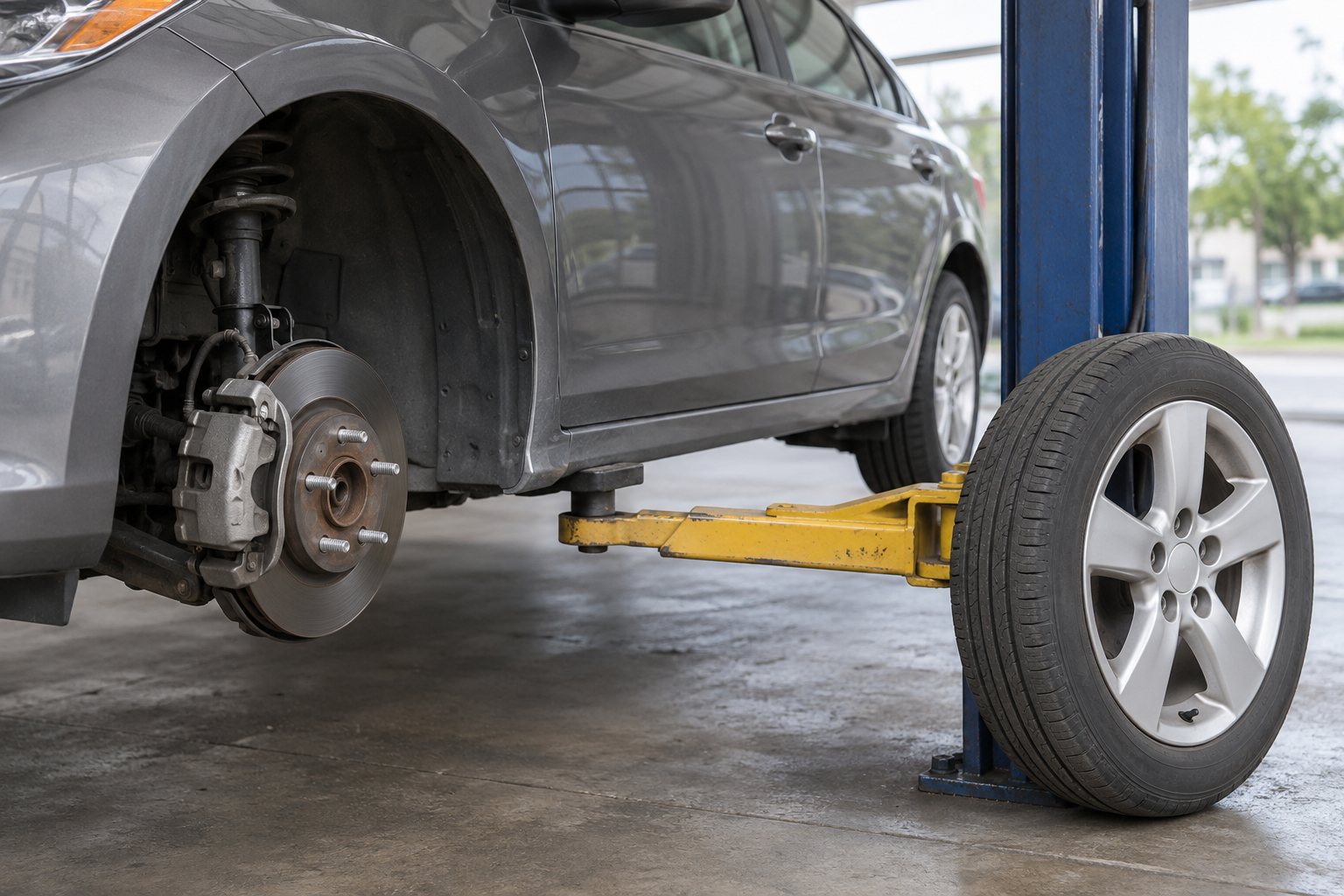
A car raised on a lift with a front wheel removed and resting against the lift post.

Services · Bellevue, WA

Tires wearing unevenly? Tire-pressure light on?

Front and rear tires wear at different rates, and a tire-pressure warning doesn't always mean a tire is low. LBR rotates your tires to the pattern your vehicle calls for, and diagnoses and replaces tire-pressure sensors when the warning light won't go out.

Signs it's time

  • It's been a while since your last rotation, or your owner's manual says one is due
  • The front tires are wearing faster than the rears, or one edge is wearing more than the other
  • The tire-pressure warning light stays on after you've checked the pressures
  • The warning light flashes when you start the car, then stays on
  • You've had new tires installed elsewhere and the sensor warning came on afterwards

Tire rotation

On most vehicles, the tires on the driven wheels and the front wheels wear faster. Moving them around at regular intervals evens out that wear, so the set lasts longer and the car handles the same from one month to the next.

The right pattern for your vehicle.

Front-wheel drive, rear-wheel drive and all-wheel-drive vehicles each use a different pattern. Directional tires and cars with different tire sizes front and rear have their own rules. We follow what your vehicle and tires call for.
A look at the tires while they're off.

Rotation is a good time to spot uneven wear, which can point to an alignment or suspension problem worth checking.

Tire-pressure sensors (TPMS)

Most vehicles have a sensor in each wheel that tells the car the tire pressure. When the warning light comes on, it's either a tire that's genuinely low or a sensor problem.

A light that stays on.

We check the pressures first, then test the sensors to find which one isn't reporting.

A light that flashes, then stays on.

That usually means a fault with a sensor or the system itself, rather than low pressure. Sensor batteries wear out with age, so older sensors often fail one after another.

After a sensor replacement or rotation.

Many vehicles need the sensors set up so the car knows which wheel each one is on. We take care of that, so the warning clears.

What you can expect

You get a report by text or email with photos of what we found, so you can see the tire wear or the faulty sensor for yourself before deciding. Repairs are covered for 12 months or 12,000 miles, parts and labor.

Common questions

How often should tires be rotated?

It depends on the vehicle and the tires. Your owner's manual gives the interval, and many people pair rotation with an oil change so it isn't forgotten.

Why is my tire-pressure light on when the tires look fine?

Tires can be noticeably low before they look low, and cold weather lowers the pressure. If the pressures are right and the light is still on, a sensor is the usual cause.

Do I need new sensors when I get new tires?

Not always. Sensors usually last for years, but because their batteries can't be replaced, it can make sense to replace an old sensor while the tire is off.

Can you rotate my tires during another service?

Usually, yes. Ask when you book, and we'll do it at the same visit.

Do you sell tires?

No. We rotate them, replace the pressure sensors and tell you what the wear pattern says, so you buy the right set.

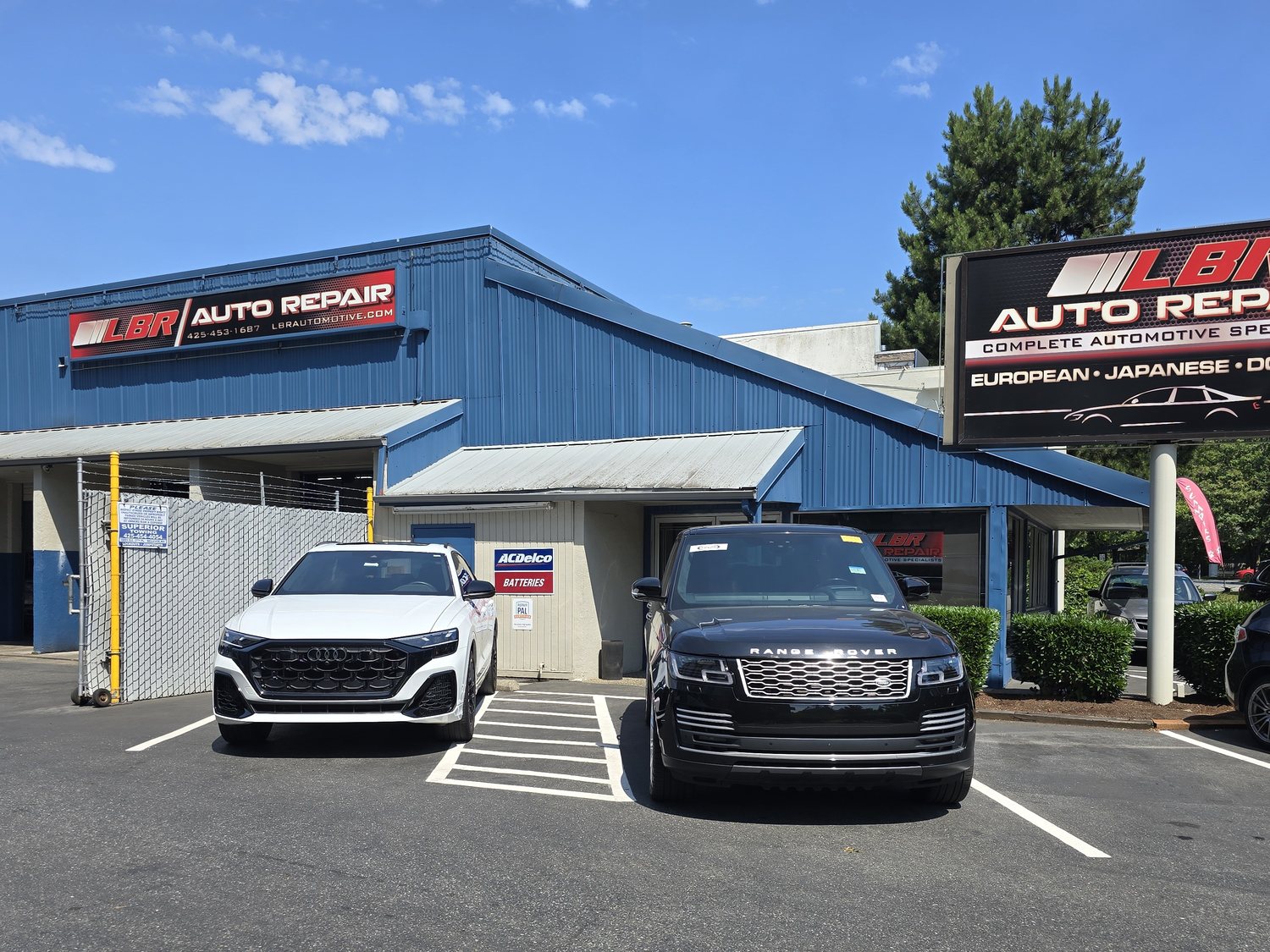
The shop and roadside sign at 13030 NE Bel Red Rd.

On Bel-Red Road

Book a rotation or sensor check

LBR Auto Repair
13030 NE Bel Red Rd
Bellevue, WA 98005

Monday–Friday, 8:00 AM–5:00 PM
Closed Saturday and Sunday

Call 425-453-1687Book an appointment ↗